


Enhancing IoT-Based Monitoring Systems with TinyML
For years, the story of IoT has been a story of the cloud. Devices collect, the cloud computes, the dashboard shows. But a quieter shift is underway (and at IoT Sparks we wanted to make it louder), one that inverts that assumption entirely. The intelligence is moving toward the device.
This is the territory of TinyML, and it is changing what a sensor can be.
A Quick Map of the Landscape
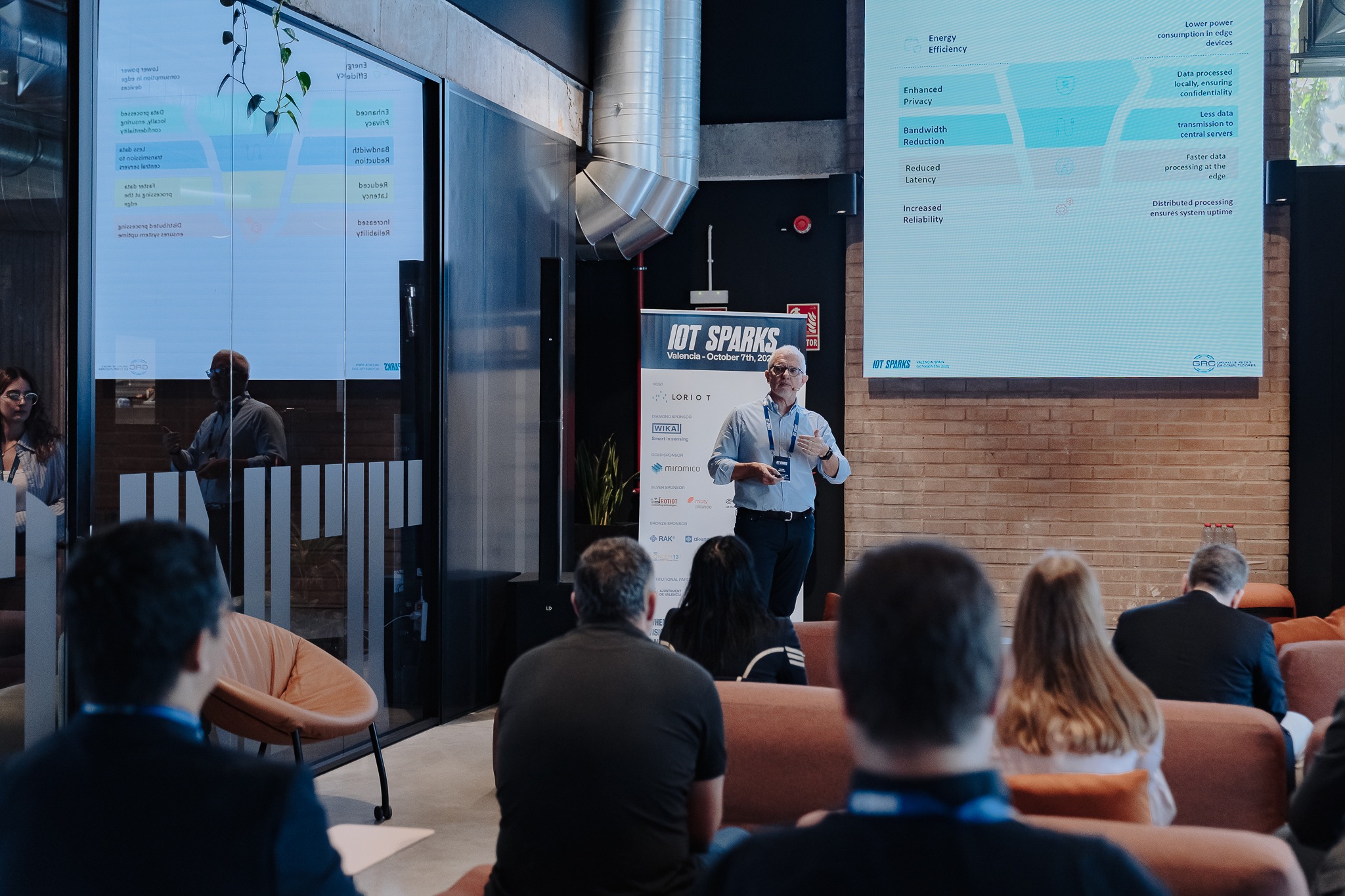
Not all artificial intelligence runs in the same place. At one end sits Cloud AI, where heavy models live in data centers and devices simply feed them raw data. In the middle is Edge AI, any computation happening closer to the source, on gateways, intelligent devices, or on-premise servers. At the far end, pushed all the way to the device itself, sits TinyML.
The definition comes from Pete Warden and Daniel Situnayake, two Google researchers who, around 2019 to 2020, framed the field around a precise constraint: TinyML is "a neural network model that runs at an energy cost of below 1 mW." In practice, that means a battery-powered device, sometimes lasting years, doing meaningful machine learning on its own. It sounds like a small distinction. It is not. It rearranges the entire economics and ethics of an IoT deployment.
Why Move the Brain to the Edge
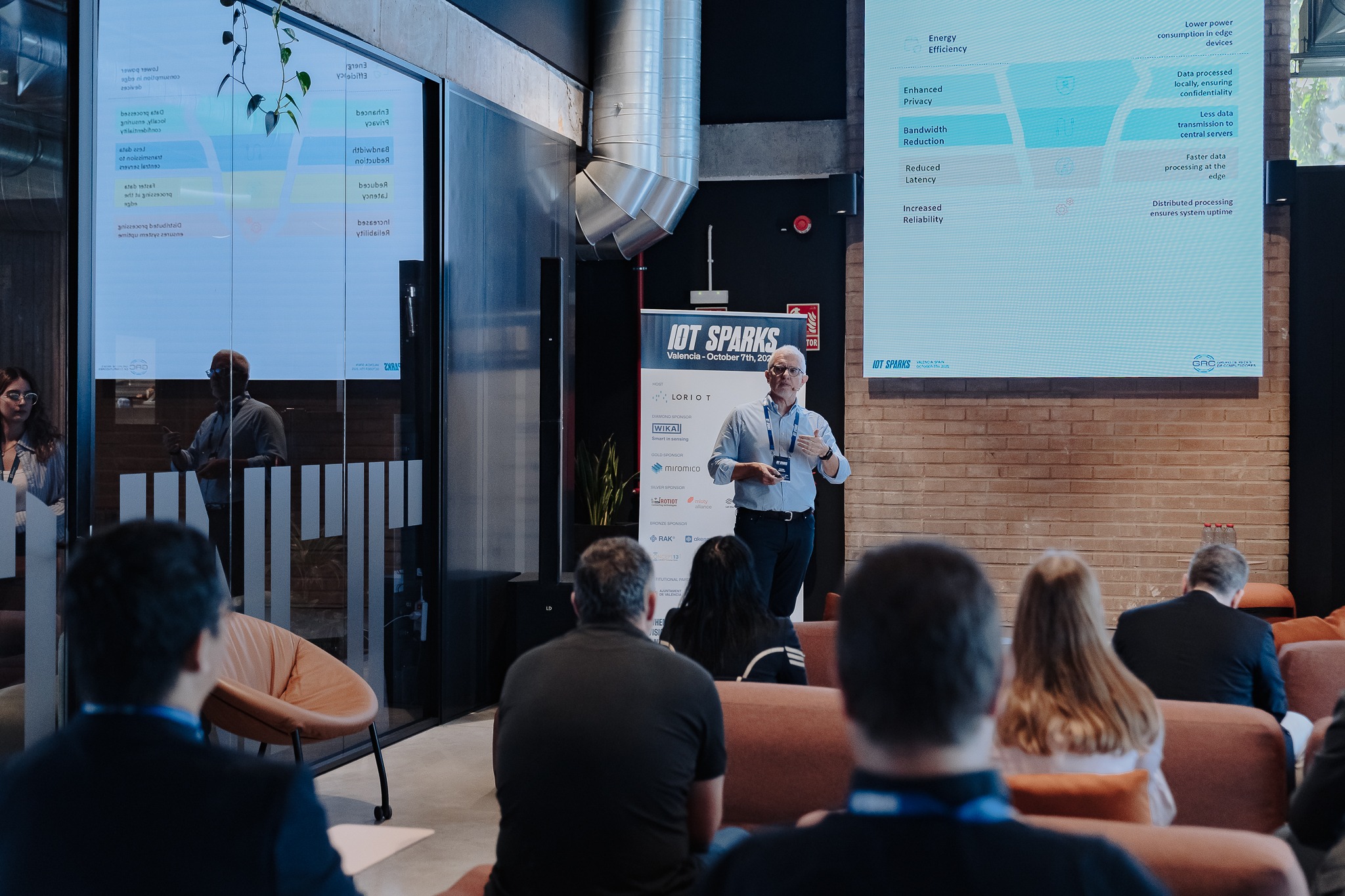
The original motivation was energy. In a classical IoT device, the transceiver, the part that sends data, is by far the most expensive to operate, so the founding idea of edge computing was simple: if transmission is expensive, compute locally and send less. That single decision opened four doors.
- Energy Efficiency: Local computing slashes transceiver activity—the single greatest battery drain on the board.
- Zero-Trust Privacy: By processing data at the point of ingestion (e.g., analyzing audio on-chip), PII never traverses the network. Compliance is built into the hardware.
- Bandwidth Freedom: Shifting from raw data streams to lightweight telemetry payloads means ultra-narrowband networks like LoRaWAN become incredibly viable.
- Deterministic Latency: Zero round-trips to the cloud means instant, real-time localized decision-making.
Reliability is sometimes added too, with caveats: hardware fails whether it sits in a server rack or on the edge, but at least local failures stay local instead of taking down the whole system.
The Tools Behind the Shift
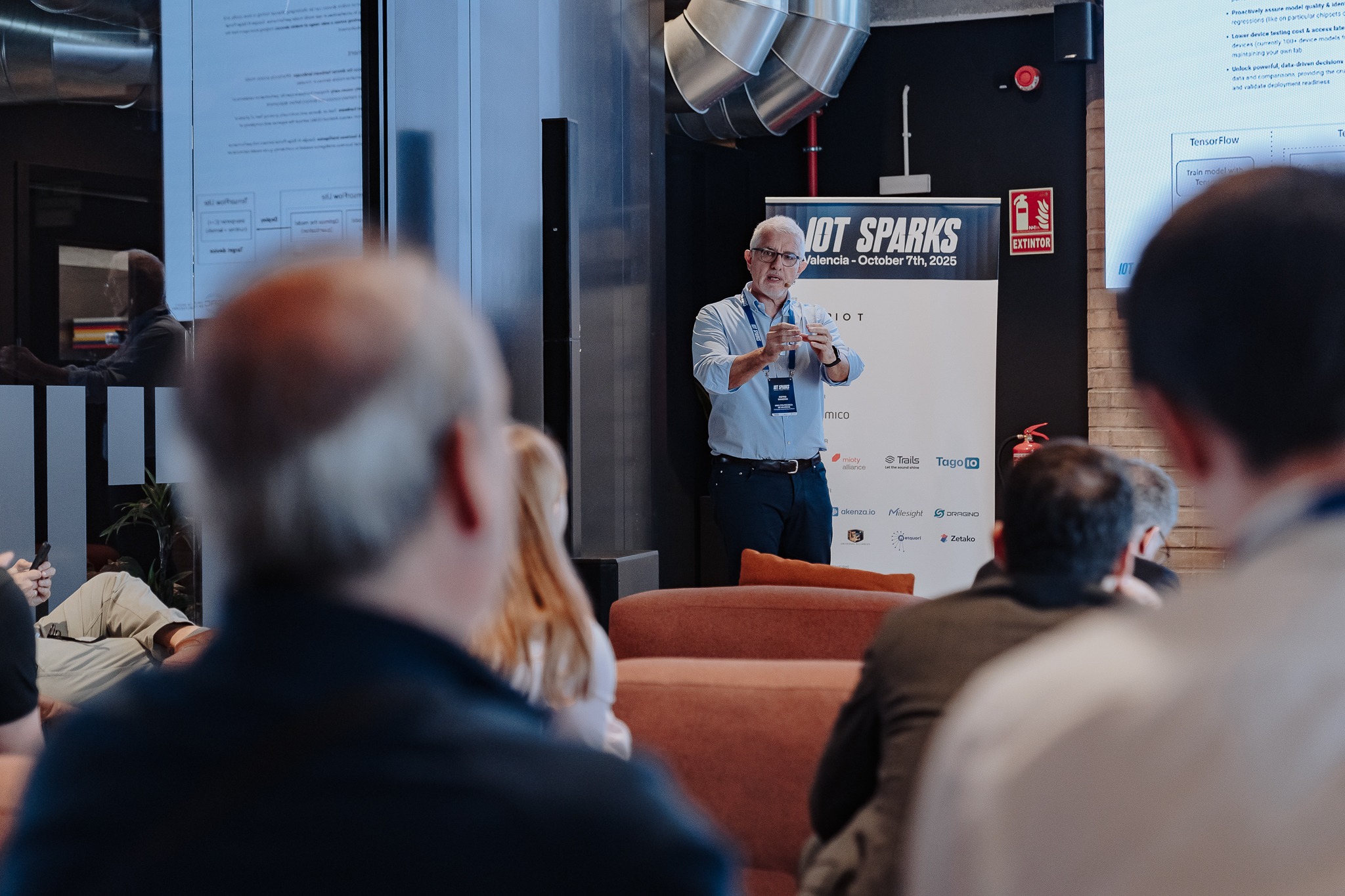
Two platforms dominate the practical work today. Google's runtime, formerly TensorFlow Lite recently rebranded as LiteRT, shrinks a model trained in the full TensorFlow ecosystem down to fit inside a microcontroller. The second is Edge Impulse, acquired by Qualcomm in March 2025, a web-based platform that handles the whole pipeline from data collection to deployment. Neither is a silver bullet, but both reflect the same reality: deploying intelligent sensors has powerful tools to support it.
What TinyML Actually Looks Like in the Field
One of the most active areas of TinyML deployment today is predictive maintenance: detecting when a machine, transformer, or pump is likely to fail before it actually does. Soundsensing, a Norwegian company, deploys sound and vibration sensors that learn the normal operating patterns of technical equipment and flag anomalies that may indicate emerging faults. A similar approach powers RAM-1 from RAM‑Center, which monitors surge arresters and power-grid infrastructure locally, performs anomaly detection on-device, and transmits only relevant events and diagnostics instead of continuous raw sensor streams.
Healthcare is producing some of the most interesting TinyML applications. Samay Health has developed Sylvee, a low-cost wearable that uses AI and acoustic sensing to continuously monitor lung health and detect early signs of respiratory deterioration. In environmental monitoring, Rainforest Connection deploys acoustic sensors in protected forests to detect illegal logging and poaching, using machine learning to generate real-time alerts for conservation teams.
A Closer Look: TinyML in Valencia
The Computer Networks Research Group (https://grc.webs.upv.es/) at Universitat Politècnica de València is exploring a range of experimental systems in this area; two projects are especially illustrative of where the field is heading.
The first is a sentiment analysis system in Parque Natural Laguna de La Mata, in Torrevieja, designed to understand how visitors react to the park. Instead of recording visitors and sending audio to a server, it runs the sentiment model locally and transmits only a single positivity score. No voice is ever recorded or sent. The park gets the insight, and the visitors keep their privacy.
The second is Bodoque, a water flow monitoring system on rivers feeding the Mar Menor lagoon. Those rivers can stay dry for eleven and a half months, then flood violently for two weeks, so a camera with continuous connectivity would be burning energy recording empty riverbeds for almost all year. The fix: a low-power module runs continuously and answers one binary question, is there water or not. Only when the answer flips to yes does the high-performance module wake up to record and analyze. Energy use dropped sharply, and because the trigger sensor is external, nothing has to sit in the river where it could be stolen, damaged, or swept away by the flood it is meant to detect.
The Tradeoff Worth Naming
TinyML is, by definition, tiny. A device on a milliwatt budget will not match a data center, and some problems sit right at its limit, like detecting whether a person is actually looking at a painting, which the Valencia group is tackling for a museum in Italy. But that constraint is the point. The question stops being "what is the most sophisticated thing we can compute" and becomes "what is the smallest amount of intelligence we need to send the smallest useful signal."
Where This Leaves Us
TinyML is not a replacement for cloud AI but a different layer of the stack: local intelligence for tasks that need to be private, immediate, or energy-constrained; cloud infrastructure for workloads that require scale or heavy computation. The key shift is in the default architecture. Instead of sending everything to the cloud for processing, TinyML starts from the opposite premise: decide what information actually matters, compute it where the data is generated, and transmit only the result. Sensors are becoming a little smarter, the systems around them a lot lighter, and data that should never have left the device no longer has to.
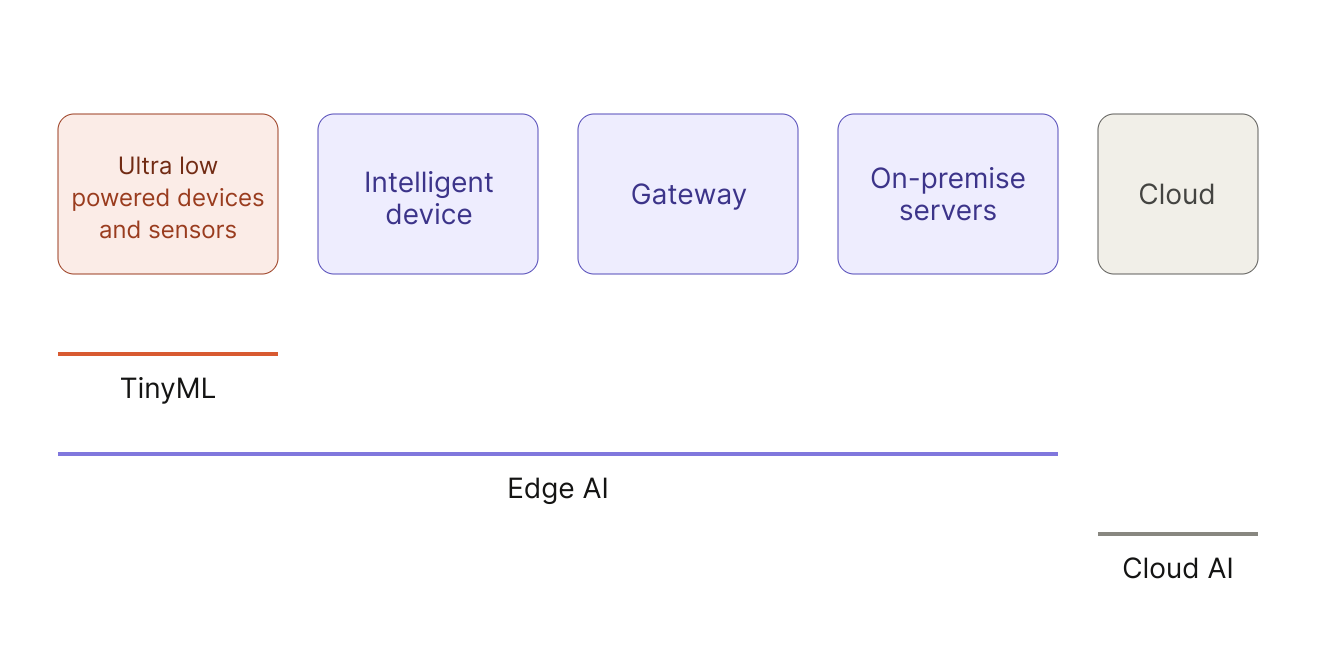
This article is based on the keynote presented by Professor Pietro Manzoni at IoT Sparks 2025, which explored how TinyML is reshaping IoT monitoring systems through on-device intelligence.
Following an incredible 80% surge in international attendance, the conference is moving to Europe’s premier architectural landmark: the Palau de les Arts. Professor Manzoni will return this year to headline IoT Sparks 2026 on October 7th, dropping attendees straight into the next frontier of practical edge AI deployment. Secure your pass to experience the absolute epicenter of global IoT innovation.
Pietro Manzoni is a Professor of Computer Engineering at the Universitat Politècnica de València and coordinator of the Computer Networks Research Group (GRC). He returns to IoT Sparks 2026 with a new keynote on TinyML.

Computer Engineering Professor
UPV


